

Industry Guide
AI data center power distribution now operates at a scale fundamentally different from traditional enterprise facilities. Modern GPU racks routinely consume 80-150 kW, with next-generation platforms targeting 200-480 kW per rack. Large AI clusters can introduce 100-500 MW load swings in seconds due to synchronized GPU workloads, checkpointing, and collective communication events.
Power distribution architecture must therefore deliver:
- Stable electrical behavior under extreme load transients
- Sub-cycle transfer strategies that avoid compute interruption
- Event-level power quality capture for root-cause analysis
- Distribution systems capable of scaling from megawatts to hundreds of megawatts
Electrical behavior
Why AI Power Distribution Is Different
GPU compute changes the electrical profile of a facility. AI training clusters and high-density compute halls often operate at higher sustained utilization, experience rapid load changes, and have less tolerance for voltage events that might be manageable in conventional enterprise environments. The result is a greater need for stable distribution behavior, clearer fault isolation strategies, and monitoring that captures event-level context instead of relying only on alarms and averages.
Transient Behavior
GPU-heavy workloads can create fast load ramps and sustained power demand. Distribution architecture must remain stable during changing load conditions and preserve visibility when an event occurs.
Power Quality Visibility
AI environments benefit from waveform capture, event correlation, and time-aligned diagnostics that help teams determine what happened, where it happened, and what to correct next.
Predictable Abnormal Behavior
During faults, transfers, maintenance, or recovery conditions, repeatable electrical behavior supports safer procedures, faster troubleshooting, and more confident operating decisions.
Scalable Distribution Foundation
AI facilities often grow by row, zone, or compute hall. Distribution design should support expansion without forcing teams to rebuild the electrical foundation each time capacity increases.
Planning implications
AI Data Centers vs Traditional Enterprise Facilities
The difference is not simply higher capacity. AI infrastructure changes how operators think about power quality, diagnostics, transfer behavior, and distribution planning across the facility.
Rack Power Density Evolution
AI workloads have accelerated the increase in rack power density. Traditional enterprise environments rarely exceeded 10-15 kW per rack, while modern GPU clusters commonly operate above 80 kW and next-generation platforms are expected to exceed 200 kW per rack.
| Design Factor | Traditional Enterprise Data Centers | High-Density AI / GPU Facilities |
|---|---|---|
| Typical rack power | 5-15 kW per rack | 80-150 kW today; next-generation deployments targeting 200-480+ kW per rack |
| Rack profile | Mixed workloads with variable utilization | Large GPU clusters running sustained high utilization workloads |
| Load variability | Gradual workload shifts | Rapid synchronized load swings across GPU clusters during training and checkpoint events |
| Tolerance for voltage events | Broader tolerance for short disturbances | Tighter tolerance; millisecond-scale events can interrupt AI training jobs |
| Diagnostics | Alarms and trending typically sufficient | Waveform capture and time-correlated event analysis often required for root-cause investigation |
| Cooling strategy | Primarily air-cooled infrastructure | Direct liquid cooling frequently required above ~40-60 kW per rack |
| Isolation strategy | Varies by facility; legacy assumptions common | Greater emphasis on predictable transfer behavior and clear isolation strategies |
| Monitoring depth | Panel-level monitoring common | Branch-level monitoring and event capture used for capacity planning and troubleshooting |
| Grid interaction | Limited impact outside the facility | Large AI campuses can introduce multi-hundred-MW load swings that interact with regional grid stability |
| Scalability | Incremental expansion over time | Pod-level expansion with tens of megawatts added per AI cluster |
Transfer and isolation strategy
4-Pole Power Distribution Architectures for Modern AI Data Centers
Some AI data center architectures evaluate 4-pole static transfer switching when electrical design requires full-conductor isolation between sources. This is most common when alternate sources are separately derived or when designers want to eliminate neutral-to-ground interactions during transfer events.
Many hyperscale facilities continue to deploy 3-pole switching with solidly grounded systems. The correct architecture depends on grounding strategy, transfer behavior requirements, and operational preferences.
4-Pole Switching Strategy
Supports full-conductor isolation approaches used in advanced AI electrical infrastructure where repeatable source behavior and clear operating states matter.
Enhanced Fault Clarity
Better-defined electrical behavior can simplify event investigation and reduce operator uncertainty during transfers, abnormal conditions, and maintenance planning.
Better Diagnostics
When combined with monitoring, predictable architecture helps teams correlate faults, transfers, and electrical events more quickly in GPU-heavy facilities.
Serviceability
AI compute environments operate continuously. Service access, maintenance workflow, and isolation strategy all matter when distribution equipment must be supported without creating unnecessary operational risk.
Product alignment
AI Power Distribution Solutions for High-Density Infrastructure
AI power distribution solutions typically combine source continuity, monitored distribution, scalable branch delivery, and fast diagnostics near the IT load. LayerZero Power Systems supports these priorities with mission-critical distribution equipment designed for modern data centers and GPU environments.
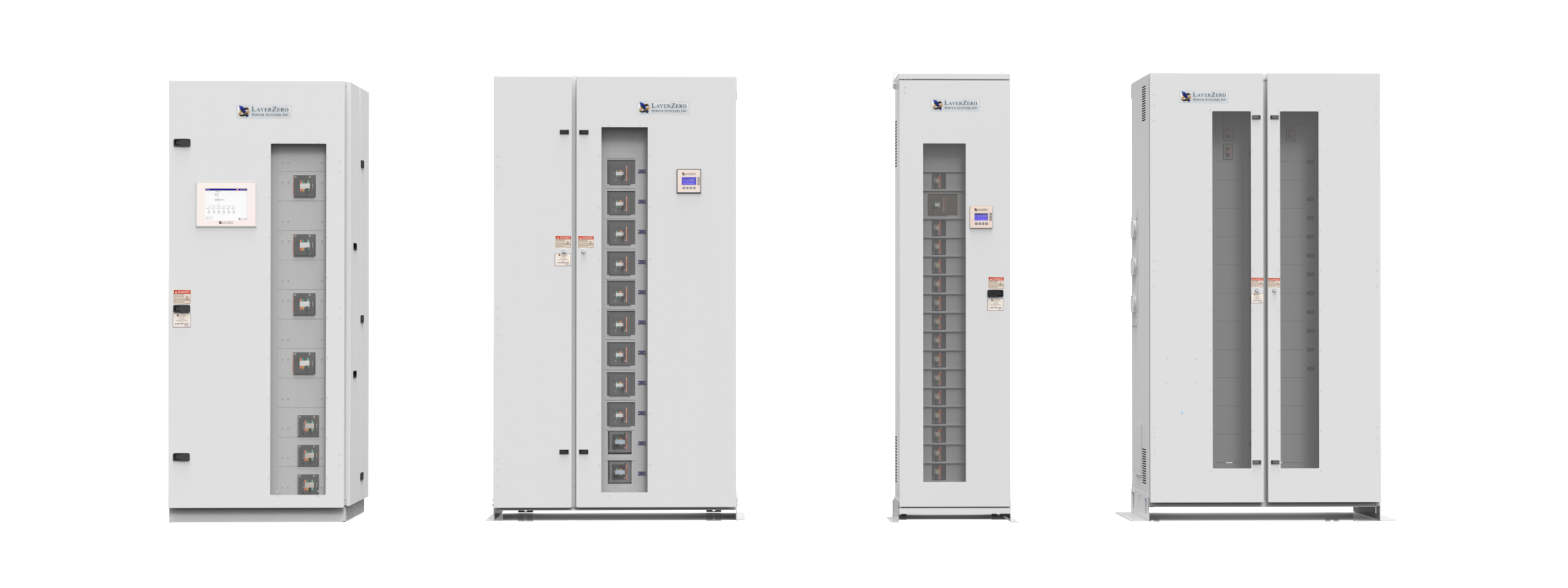
High-Density Power Distribution Panels for AI Data Centers
LayerZero Power Systems high-density distribution solutions support AI data centers, GPU clusters, and other compute-intensive environments where scalable circuit delivery, visibility, and serviceability matter.
- Supports organized distribution near high-density compute loads
- Branch-level monitoring can improve capacity planning and troubleshooting speed
- Designed to support scalable deployment patterns across AI infrastructure
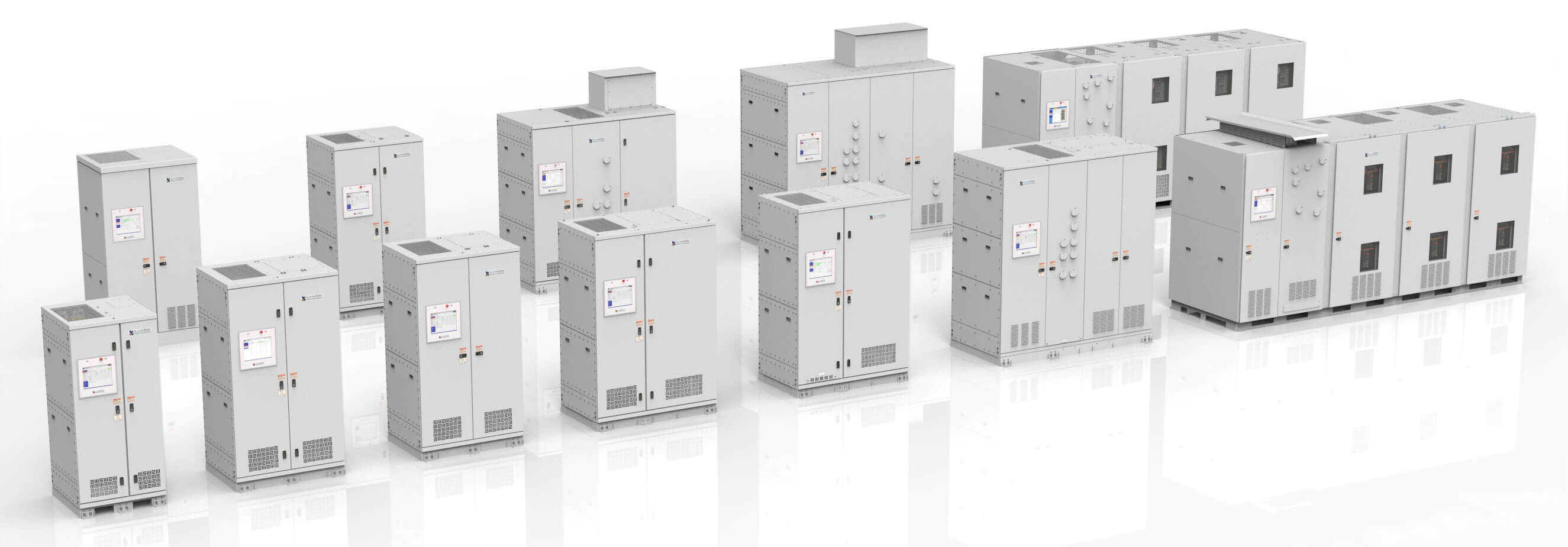
Static Transfer Switching for Continuity Strategies
Static transfer switches support continuity strategies in sensitive compute environments by helping reduce the likelihood that upstream disturbances become downtime at the rack.
- Supports redundant source architectures in high-availability environments
- Helps limit the downstream effect of source-side disturbances
- Useful where compute continuity and transfer behavior are critical design concerns
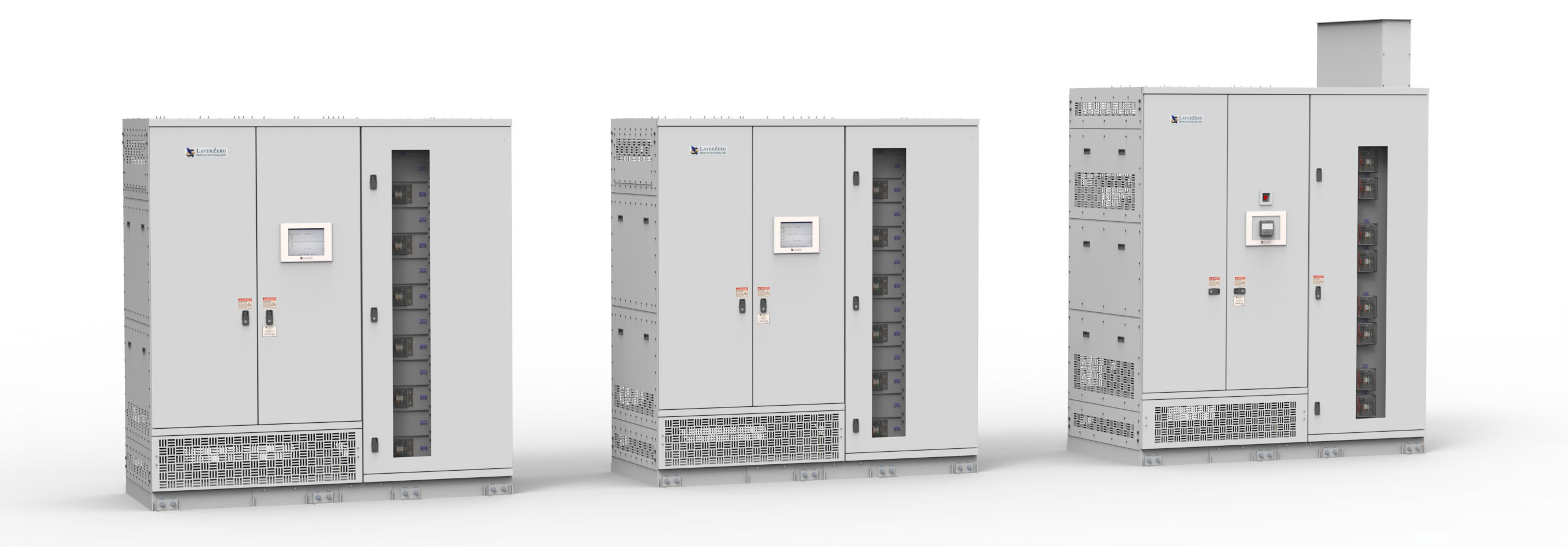
Monitored Distribution for AI Compute Halls
Monitored distribution supports capacity planning, event investigation, and safer growth management in facilities where density and utilization are increasing quickly.
- Supports visibility aligned to day-to-day operations
- Improves understanding of circuit loading and expansion readiness
- Helps teams reduce guesswork during abnormal conditions
Use cases
Key Applications in High-Density AI Compute Environments
AI power distribution solutions are used in facilities where a short-duration electrical issue can interrupt long-running jobs, disrupt inference availability, complicate troubleshooting, or create uncertainty during expansion and maintenance.
AI Training Data Centers
Large GPU training environments often require stable power delivery, repeatable transfer behavior, and event-level diagnostics that support continuity for long-duration compute jobs.
Inference Platforms
Inference infrastructure benefits from fault-tolerant distribution paths and serviceable electrical architecture that helps protect always-on model-serving operations.
High-Density Compute Halls
As facilities grow by zone or pod, distribution systems must support structured expansion, capacity validation, and monitoring that keeps change management under control.
Edge AI and Specialized Compute
Smaller or distributed AI environments still need continuity strategies, visibility, and maintainable infrastructure when critical compute must remain available.
Manufacturer fit
Why Choose LayerZero Power Systems for AI Power Distribution?
LayerZero Power Systems designs mission-critical power distribution equipment for high-density electrical environments where continuity, operational clarity, and serviceability matter. For AI data centers and GPU infrastructure, that means supporting the priorities operators care about most: predictable behavior, fast diagnostics, scalable distribution, and dependable operation under real conditions.
Mission-Critical Focus
Designed for environments where electrical disturbances can affect uptime, compute continuity, and maintenance strategy.
Operational Visibility
Monitoring and event context help teams move faster when investigating faults, validating capacity, or planning changes.
High-Density Readiness
Supports AI and GPU-heavy facilities where electrical architecture must scale with increasing rack density and growth pressure.
Serviceability and Clarity
Designed to support more controlled maintenance outcomes, clearer operating states, and faster root-cause analysis.
Search-friendly Q&A
AI Power Distribution FAQs
What is AI power distribution?
What makes AI data center power different from traditional enterprise loads?
Why do AI facilities emphasize predictable fault behavior and isolation strategies?
What role do static transfer switches play in AI infrastructure?
Why is 4-pole power distribution specified in some AI data centers?
How does branch-level monitoring help GPU facilities?
What power distribution products are commonly used in AI data centers?
Is LayerZero® a fit for AI power distribution solutions?
Technical terminology
AI Data Center Power Distribution Glossary
- AI Power Distribution
- The electrical distribution architecture used to support AI compute environments such as GPU clusters, model training facilities, and inference platforms where continuity and power quality matter.
- GPU Load Transients
- Rapid changes in power draw caused by workload shifts in GPU-heavy environments. These events can stress the electrical distribution layer and make visibility essential.
- AI Infrastructure Power Distribution Systems
- Mission-critical electrical equipment used to support AI facilities, including static transfer switches, high-density power panels, monitored distribution, and power quality monitoring.
- Mission-Critical Power Distribution
- Distribution systems engineered to help maintain continuity during transfers, faults, maintenance, or abnormal conditions where downtime is costly.
- 4-Pole Power Distribution
- A switching architecture that transfers all conductors, including neutral, to support full isolation strategies and more consistent behavior during source changes and abnormal events.
- Static Transfer Switch (STS)
- An automatic transfer device used between power sources to support continuity for sensitive loads with minimal interruption.
- Branch-Level Monitoring
- Circuit-level electrical visibility used for capacity planning, troubleshooting, change management, and early detection of distribution issues in high-density environments.
- Power Quality Monitoring
- Continuous capture and analysis of electrical events such as sags, transients, and harmonic conditions to support faster diagnostics and reliability improvement.
Next step
Let’s Discuss Your AI Power Distribution Requirements
Planning power distribution for AI infrastructure, GPU clusters, or a high-density compute facility?
Contact LayerZero