


Colocation data centers operate under a different electrical model than enterprise facilities. Instead of a single owner controlling the entire environment, power infrastructure must support multiple tenants, independent capacity planning, and measurable power usage across shared infrastructure.
Colocation power distribution must deliver reliable capacity while maintaining tenant isolation, accurate energy visibility, and predictable redundancy behavior. Operators rely on distribution systems that provide circuit-level monitoring, scalable expansion paths, and clear diagnostics when electrical events occur.
Engineering focus: support multi-tenant capacity growth, maintain electrical isolation between customers, and provide accurate monitoring for operational visibility and power usage reporting.
Why Colocation Data Centers Require Specialized Power Distribution
Unlike enterprise data centers, colocation facilities must simultaneously support many independent customers with different density profiles, redundancy requirements, and growth timelines. The electrical infrastructure must be flexible enough to allocate power to each tenant while maintaining reliability across the entire facility.
- Multi-tenant architecture: electrical systems must safely support multiple customers on shared infrastructure
- Metered power distribution: circuit-level monitoring enables accurate billing and capacity management
- Flexible redundancy models: tenants may require N+1, 2N, or distributed redundant power paths
- Incremental capacity expansion: facilities must scale power infrastructure as customer demand grows
- Operational visibility: monitoring helps operators quickly identify electrical events affecting specific tenants or zones
Colocation Data Centers vs Enterprise Data Centers
| Design Factor | Enterprise Data Centers | Colocation Data Centers |
|---|---|---|
| Ownership model | Single organization controls infrastructure and load profile | Multiple independent tenants share electrical infrastructure |
| Power allocation | Capacity planned for internal workloads | Power must be allocated, tracked, and billed across tenants |
| Monitoring requirements | Facility-level monitoring may be sufficient | Circuit-level visibility required for tenant accountability |
| Growth pattern | Planned internal expansions | Continuous tenant onboarding and capacity expansion |
| Redundancy architecture | Standardized redundancy model | Multiple redundancy tiers across different customers |
Power Redundancy Strategies in Colocation Data Centers
Colocation facilities often support multiple redundancy models within the same building. Some tenants require N+1 redundancy, while others specify fully independent 2N electrical paths. The distribution infrastructure must support these architectures while maintaining clear isolation between tenants.
- N+1 redundancy: additional capacity available to support component failure without loss of service
- 2N power architecture: fully independent electrical paths for maximum fault tolerance
- A/B power distribution: dual feed architecture commonly used to support redundant IT equipment
- Static transfer switching: fast transfer between sources to maintain continuity for sensitive loads
Operational objective: provide tenants with predictable redundancy behavior and clearly defined electrical boundaries.
Branch Circuit Monitoring and Metering in Colocation Facilities
Accurate monitoring is essential in colocation environments where electrical consumption must be measured for billing, capacity planning, and operational management. Branch circuit monitoring systems provide visibility into the electrical load serving individual cabinets, cages, or tenant zones.
- Tenant-level metering: enables accurate billing for power usage
- Capacity planning: operators can identify available headroom before deploying new equipment
- Early overload detection: monitoring helps prevent branch circuit overload conditions
- Operational diagnostics: circuit-level visibility accelerates troubleshooting during electrical events
Power Distribution Equipment for Colocation Data Centers
Metered Power Distribution Panels for Colocation Data Centers
LayerZero Power Systems manufactures mission-critical power distribution equipment designed for colocation data centers and multi-tenant facilities. High-density distribution panels with branch circuit monitoring support tenant-level power visibility while enabling operators to scale capacity across growing compute environments.
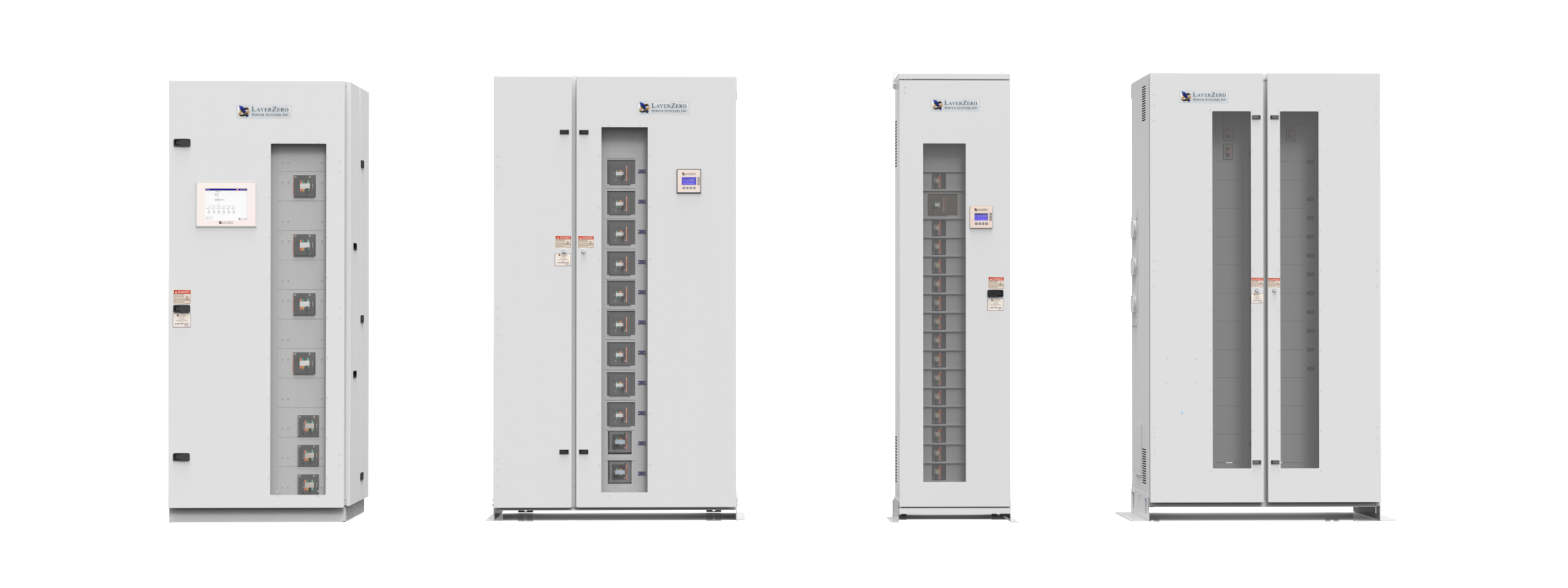
Colocation facilities also frequently deploy static transfer switches to support redundancy strategies and monitored power distribution for cabinet-level capacity management.
Key Applications in Colocation Data Centers
- Multi-tenant facilities requiring tenant-level electrical isolation
- Colocation operators offering metered power billing
- High-density cabinets supporting cloud or enterprise tenants
- Facilities expanding capacity across multiple compute halls
- Data centers supporting mixed redundancy tiers across different customers
Why Choose LayerZero Power Systems for Colocation Data Center Power Distribution?
LayerZero Power Systems designs mission-critical power distribution equipment for colocation data centers where uptime, scalability, and electrical visibility are essential.
- Multi-tenant power distribution: engineered for colocation facilities supporting diverse customer loads
- Integrated monitoring: circuit-level visibility supports metering and capacity planning
- Scalable architecture: distribution systems designed for incremental facility expansion
- Operational reliability: equipment built for high-availability data center environments
Colocation Data Center Power Distribution Glossary
- Colocation Data Center
- A facility where multiple organizations house computing infrastructure while sharing common power, cooling, and network infrastructure.
- Multi-Tenant Power Distribution
- Electrical infrastructure designed to support multiple independent customers within the same data center facility.
- Branch Circuit Monitoring
- Monitoring technology that measures electrical parameters at individual circuits to support capacity planning, tenant billing, and operational visibility.
- Metered Power Distribution
- Electrical distribution equipment that measures energy consumption at various levels of the power system to support billing and energy management.
- N+1 Redundancy
- An electrical architecture where an additional component is available to maintain service if a primary component fails.
- 2N Redundancy
- A fully independent electrical architecture providing duplicate power paths for maximum reliability.
- Static Transfer Switch (STS)
- A device that automatically transfers load between power sources with minimal interruption to maintain continuity for critical equipment.
Colocation Data Center Power Distribution FAQs
What is colocation data center power distribution?
Colocation data center power distribution refers to the electrical infrastructure that delivers reliable power to multiple independent tenants within a shared facility. It typically includes monitored distribution panels, redundant power paths, and tenant-level metering systems.
Why is monitoring important in colocation power systems?
Monitoring allows operators to track power usage for billing, manage capacity across tenants, and quickly identify electrical events affecting specific circuits or zones.
How do colocation data centers provide redundancy?
Many colocation facilities provide redundant power paths such as N+1 or 2N architectures. Customers typically receive dual A/B power feeds to support redundant IT equipment.
What power distribution equipment is used in colocation data centers?
Common equipment includes monitored remote distribution panels (RDPs), power distribution units (PDUs), static transfer switches, and branch circuit monitoring systems.
Is LayerZero® used in colocation data centers?
Yes. LayerZero Power Systems manufactures mission-critical power distribution equipment designed for colocation, hyperscale, and enterprise data centers requiring high reliability and operational visibility.
Discuss Your Colocation Data Center Power Distribution Requirements
Designing electrical infrastructure for a colocation facility or multi-tenant data center? Contact LayerZero to discuss your power distribution requirements.