


Electrical events leave little visible evidence behind. Electrons flowing through conductors carry no memory, and once an anomaly passes, the opportunity to understand what occurred is often lost.
For operators of mission-critical facilities, this creates a serious challenge: when an electrical disturbance occurs, identifying its root cause becomes difficult unless the event is captured at the exact moment it happens.
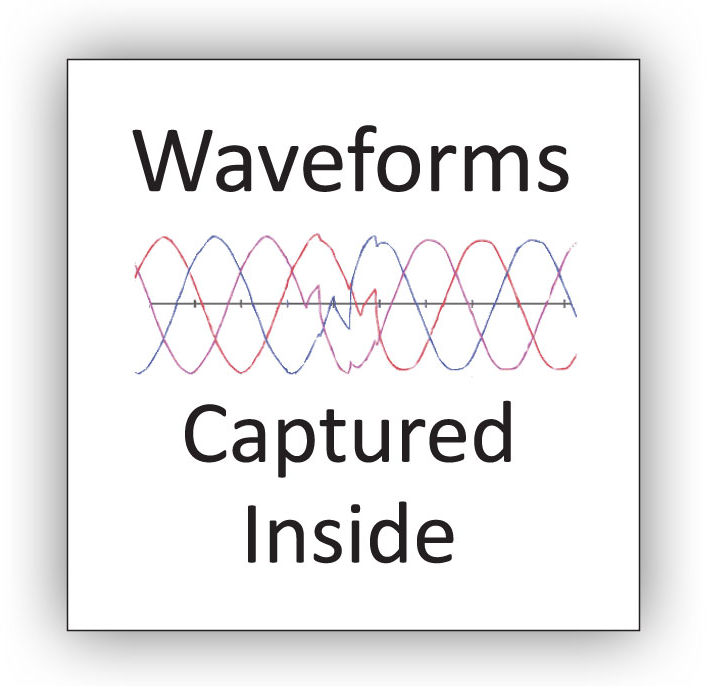
The most effective way to preserve this forensic evidence is to record voltage and current waveforms at the instant the anomaly is detected, synchronized precisely to the network clock.
Built-In Electrical Event Forensics
LayerZero Power Systems integrates waveform capture functionality directly into its power distribution equipment, giving facility operators immediate access to high-value diagnostic data without external instrumentation.
When an anomaly occurs, voltage and current waveforms can be captured at:
- PDU inputs and outputs
- RPP inputs
- Branch circuit breaker outputs
- Static Transfer Switch inputs and output
Understanding Transfer Events
In many facilities, the static transfer switch becomes the final protective barrier before critical loads are exposed to interruption.
Operators often know a transfer occurred — and appreciate that the load remained protected — but remain uncertain about the exact condition that triggered the transfer.
Without detailed event data, eliminating the underlying issue becomes difficult and repeat events remain possible.
Precise Transfer Analysis Without External Recorders
Traditionally, capturing this level of detail required multiple external multi-channel recorders, significant setup effort, and high cost.
LayerZero eliminates that complexity by providing integrated waveform capture of transfer events directly within the equipment.
The system records a six-cycle waveform showing precise voltage and current behavior before, during, and after the event — including transfers that occur and transfers intentionally prevented by system logic.
Captured data is displayed on the control panel and can also be viewed remotely through a web browser.