


What is a dead front panel?
Direct answer
A dead front panel is electrical equipment designed so energized conductors, bus, and live termination points remain shielded behind internal barriers during normal operation. In a dead front electrical panel, operators interact only with protected breaker handles, controls, and designated access points while energized sections remain physically isolated behind dead-front barriers or covers.
Key takeaways
- Prevents accidental contact with energized parts.
- Uses internal barriers, dead-front doors, and protective covers.
- Supports safer operation and controlled maintenance access.
- Common in mission-critical power distribution equipment.
What dead front means in electrical equipment
In electrical equipment, dead front means the front-access side of the equipment does not expose energized conductors during normal operation.
Whether used in a dead front electrical panel, switchboard, or branch distribution cabinet, live bus, cable terminations, and major power components remain behind internal steel barriers, dead-front plates, or compartmentalized service sections.
This allows breaker operation, inspection, and controlled access while limiting exposure to energized internal components.
Dead front construction uses multiple protective layers
A dead front cover is only one part of the design. In practice, dead front construction usually includes:
- Outer enclosure doors
- Internal dead-front steel barriers
- Breaker escutcheons
- Compartment separation
- Finger-safe service zones
These layers control how internal sections are accessed and help maintain separation between operators and energized power paths.
Example: dead front construction in power distribution equipment
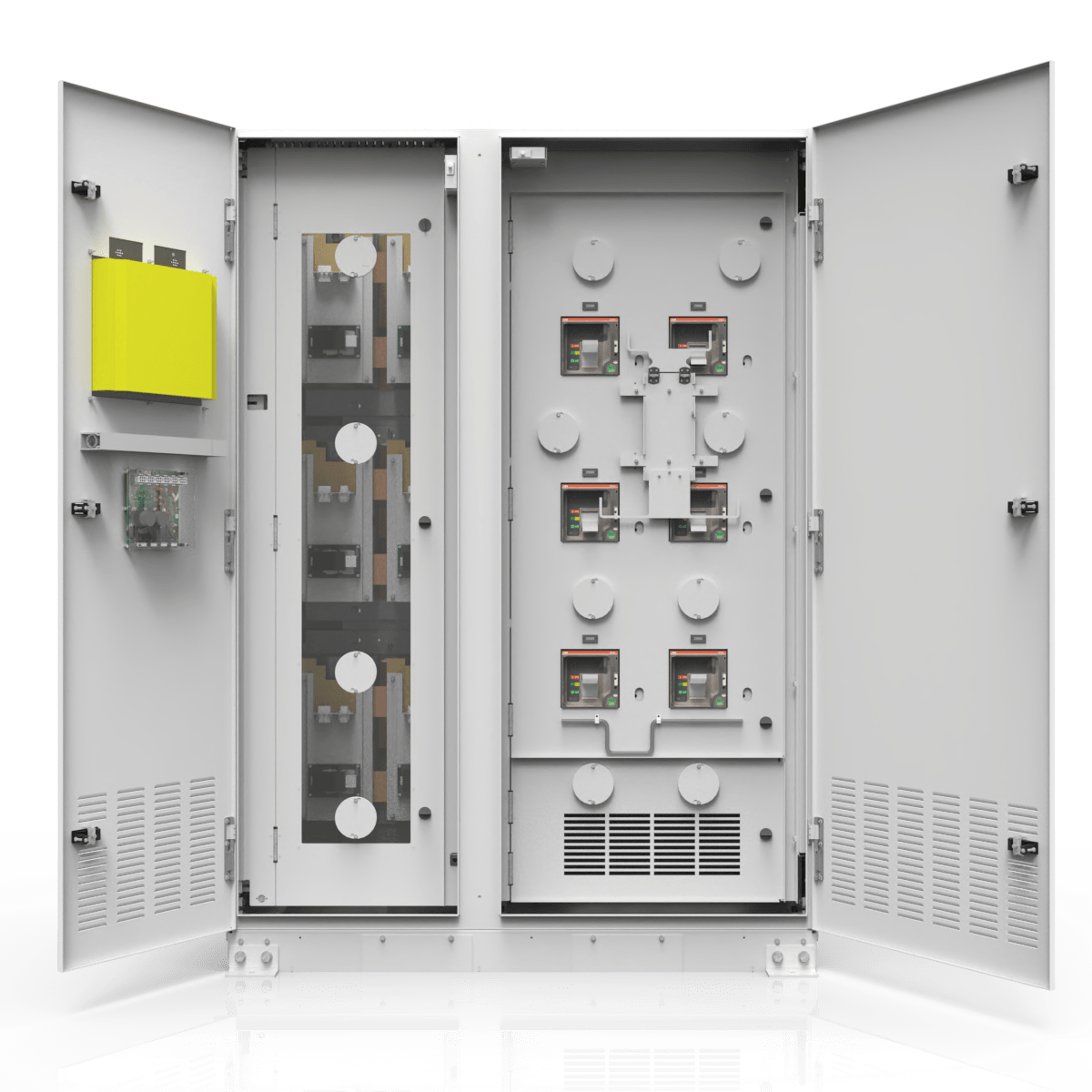
In this example, the outer enclosure doors are open, but the internal vertical barrier system continues separating energized sections from operator access areas.
Breaker operating surfaces remain accessible while major internal conductors stay protected behind fixed dead-front construction.
Dead front in mission-critical applications
In data centers, AI infrastructure, enterprise facilities, and colocation environments, equipment often remains energized while adjacent sections are inspected or serviced.
Dead front construction helps limit exposure by keeping energized sections isolated while allowing controlled access to designated operating areas.
This is especially common in mission-critical Power Distribution Units (PDUs) and mission-critical Remote Power Panels (RPPs), where multiple branch circuits may remain active during maintenance activity.
Example: dead front in remote power distribution
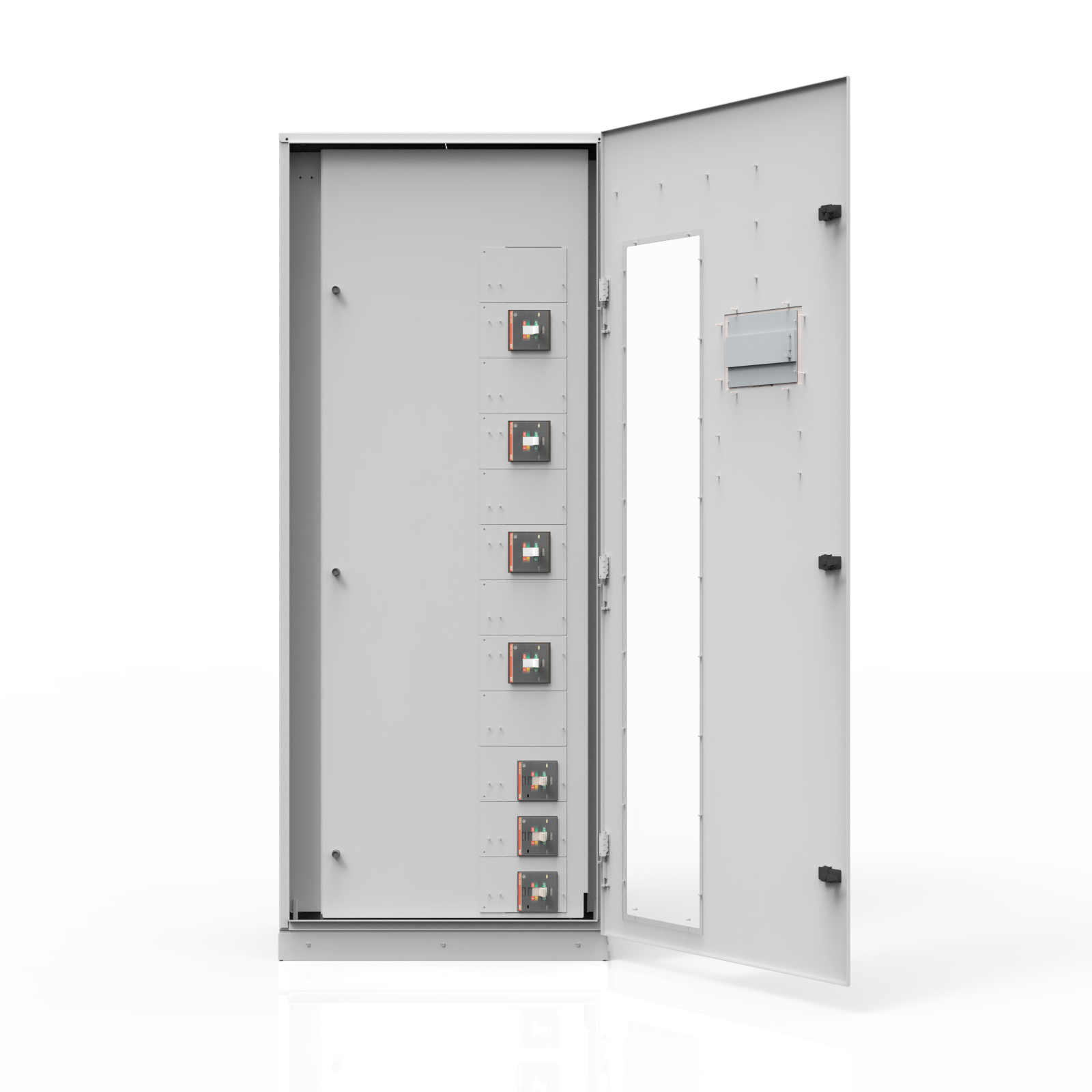
Here the breaker section remains visible, while deeper power distribution sections remain behind internal separation.
This arrangement allows branch circuit access without exposing full internal distribution paths.
Dead front does not mean de-energized
A dead front panel may be fully energized and carrying critical load.
The term means that energized parts are not directly exposed during normal operator access.
That distinction is important because mission-critical systems frequently remain energized during inspection, monitoring, and controlled service procedures.
Example: layered dead-front construction in a switchboard
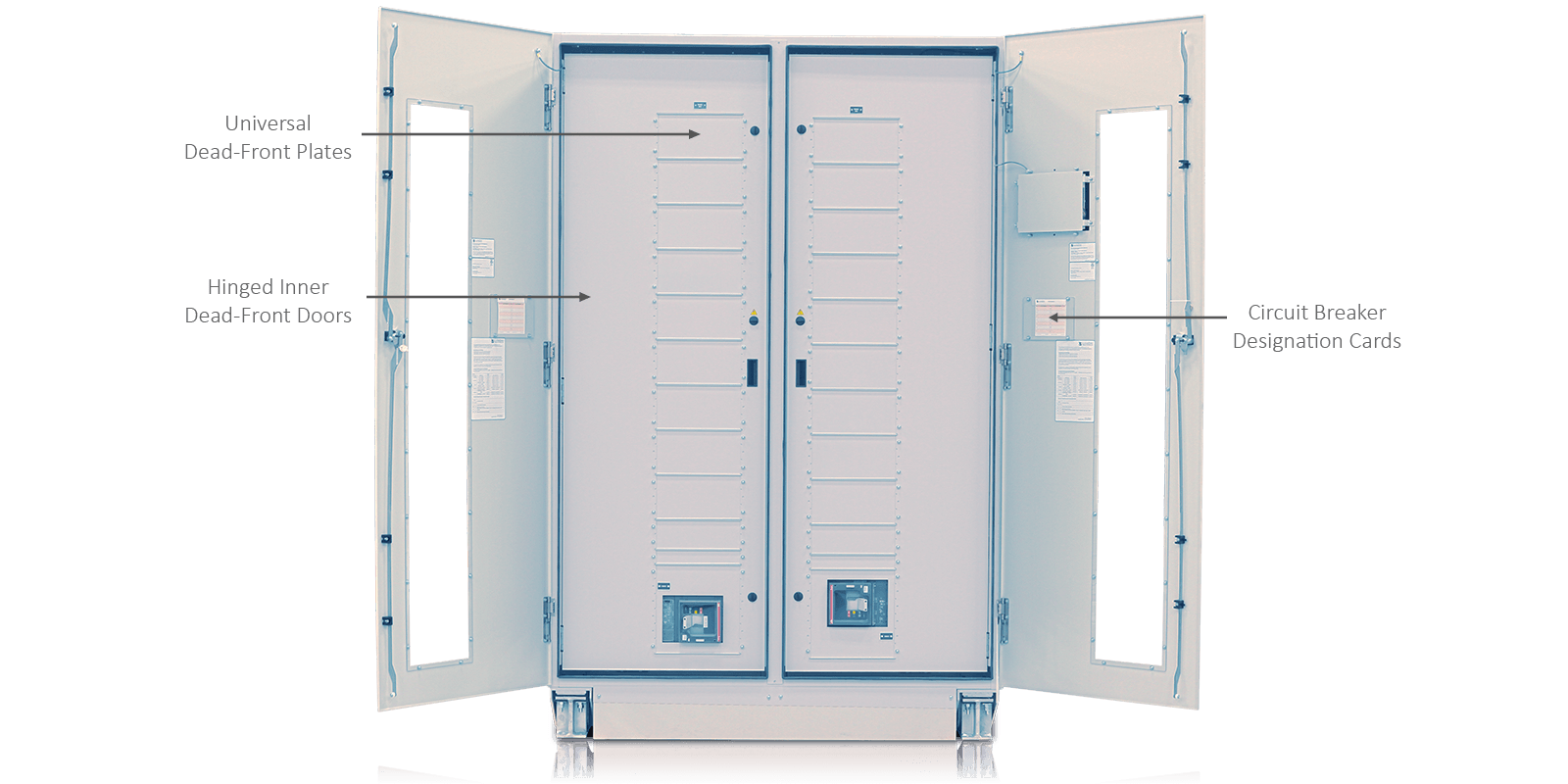
This switchboard example shows how dead front construction uses multiple barrier layers: outer enclosure doors, universal dead-front plates, and hinged inner dead-front doors.
Layered separation helps maintain controlled access to energized equipment.
Safety First in equipment design
LayerZero applies a Safety First approach to designing mission-critical power distribution equipment.
Dead front construction is one part of that design philosophy, where enclosure layout, access zones, barrier systems, and serviceability are developed together to maximize operator safety while maintaining equipment availability.
This same design approach extends into solutions such as SafePanel®, where maintenance access and energized separation are treated as core design requirements. :contentReference[oaicite:2]{index=2}
Where dead front panels are commonly used
- Power Distribution Units
- Remote Power Panels
- Static Transfer Switches
- Critical switchboards
- Branch distribution equipment
Last reviewed by LayerZero Power Systems.