Is LayerZero suitable for AI and high-density GPU loads?
Direct answer
Yes. LayerZero power distribution solutions are commonly specified for high density environments such as AI
and GPU compute, where uptime, fast transfer performance, monitoring, and scalability are critical.
Final suitability depends on the electrical architecture, redundancy requirements, and load profile.
Key takeaways
Designed for mission critical uptime and high availability.
Supports scalable power distribution as rack and cluster density increases.
Monitoring provides visibility into load, alarms, and power quality conditions.
Solutions can be configured to align with redundancy goals and facility standards.
Full explanation
High density GPU and AI compute environments introduce rapid load changes, increased thermal stress,
and tighter uptime expectations. These facilities also place heavy demands on upstream power
infrastructure, including redundancy design, transfer performance, and operational visibility.
LayerZero systems are built for mission critical applications where continuity of power is the priority.
Depending on the solution, LayerZero can support architectures that reduce exposure to single points
of failure, improve transfer performance between sources, and provide monitoring data that helps
teams detect abnormal conditions before they become outages.
For AI deployments, the correct solution is always architecture specific. Equipment selection should
align with target availability tier, upstream source design, distribution topology, grounding strategy,
and the expected behavior of GPU loads. LayerZero applications and engineering teams can assist with
sizing and configuring a solution for the environment.
Common requirements for AI and GPU power
High availability design with defined redundancy objectives.
Distribution that scales with future rack and cluster growth.
Operational visibility through monitoring, alarms, and power quality data.
Equipment and layouts that support maintainability and safe service practices.
An RPP, or Remote Power Panel, is a downstream power distribution panel that receives power from upstream equipment and distributes it through multiple branch circuits to cabinets, racks, and other critical loads.
In data centers and other mission-critical environments, Remote Power Panels are commonly installed closer to the load so power can be distributed efficiently to high-density cabinets, IT equipment, and expanding floor layouts without requiring every branch circuit to originate from a larger upstream unit.
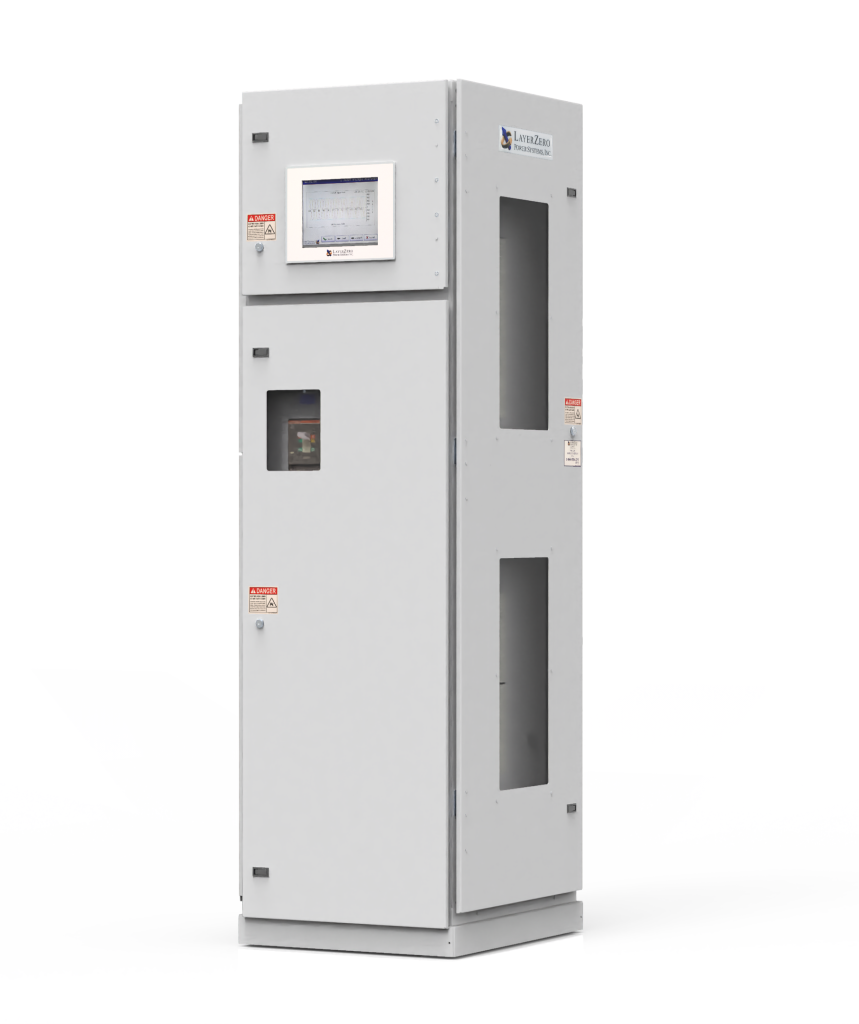
LayerZero® Remote Power Panels are engineered for mission-critical power distribution where reliability, flexibility, safety, and maintainability matter. They are especially relevant in high-density deployments, AI GPU processing environments, and fast-scaling electrical architectures where localized branch circuit distribution is essential.
A LayerZero® Remote Power Panel (RPP) receives power from upstream distribution equipment and delivers localized branch circuit power to critical downstream loads such as cabinets, racks, and high-density compute environments.
How Does a Remote Power Panel Work?
A Remote Power Panel receives power from upstream equipment such as a Power Distribution Unit, mission-critical distribution system, or other protected source and then distributes that power through multiple branch circuits to downstream loads.
In many layouts, the RPP is placed closer to the cabinets or equipment it serves. This helps reduce long branch circuit runs, improves layout flexibility, and supports cleaner distribution planning in large or evolving facilities.
Receives power from upstream distribution equipment
Provides localized branch circuit distribution
Supports flexible cabinet and rack layouts
Helps serve high-density and expanding load environments
Improves distribution efficiency closer to the point of use
Wall-mounted and space-conscious electrical layouts
Telecommunications facilities
High-availability industrial operations
Why Are RPPs Important in High-Density and AI Environments?
High-density computing environments often require more branch circuits, more localized distribution, and more flexibility as cabinet densities increase. In AI and GPU processing environments, electrical distribution must support concentrated loads while still remaining serviceable and scalable.
Remote Power Panels help address this by extending branch circuit distribution closer to the equipment, making them well suited for modern cabinet densities, rapid infrastructure growth, and floor layouts that need to change over time.
What Makes LayerZero Remote Power Panels Different?
LayerZero Remote Power Panels are built for mission-critical environments where uptime and maintainability are essential.
Designed for mission-critical power distribution
Suitable for high-density cabinet layouts
Available in wall-mounted and space-efficient configurations
Built to support scalable downstream branch distribution
Aligned with LayerZero’s focus on safety, serviceability, and operational reliability
Upstream coordination with PDUs and other distribution equipment
Access, serviceability, and installation preferences
If your project involves high-density compute, AI processing, or evolving cabinet layouts, selecting the right RPP configuration early can improve both scalability and long-term maintainability.
Common Questions About RPPs
What does RPP stand for?
RPP stands for Remote Power Panel.
What is an RPP in a data center?
In a data center, an RPP is a downstream distribution panel used to deliver branch circuit power closer to cabinets and IT loads.
Is an RPP the same as a PDU?
No. A PDU typically serves as an upstream distribution point, while an RPP extends branch circuit distribution closer to downstream loads.
Are RPPs used for high-density cabinets?
Yes. RPPs are often used where high-density cabinet layouts require localized branch distribution and flexible expansion.
A Power Distribution Unit (PDU) is electrical equipment that receives power from an upstream source and distributes it safely to multiple downstream loads through protected branch circuits.
In mission-critical environments, Power Distribution Units are used to distribute conditioned power to servers, cabinets, process equipment, and critical branch circuits while supporting protection, monitoring, and service access.
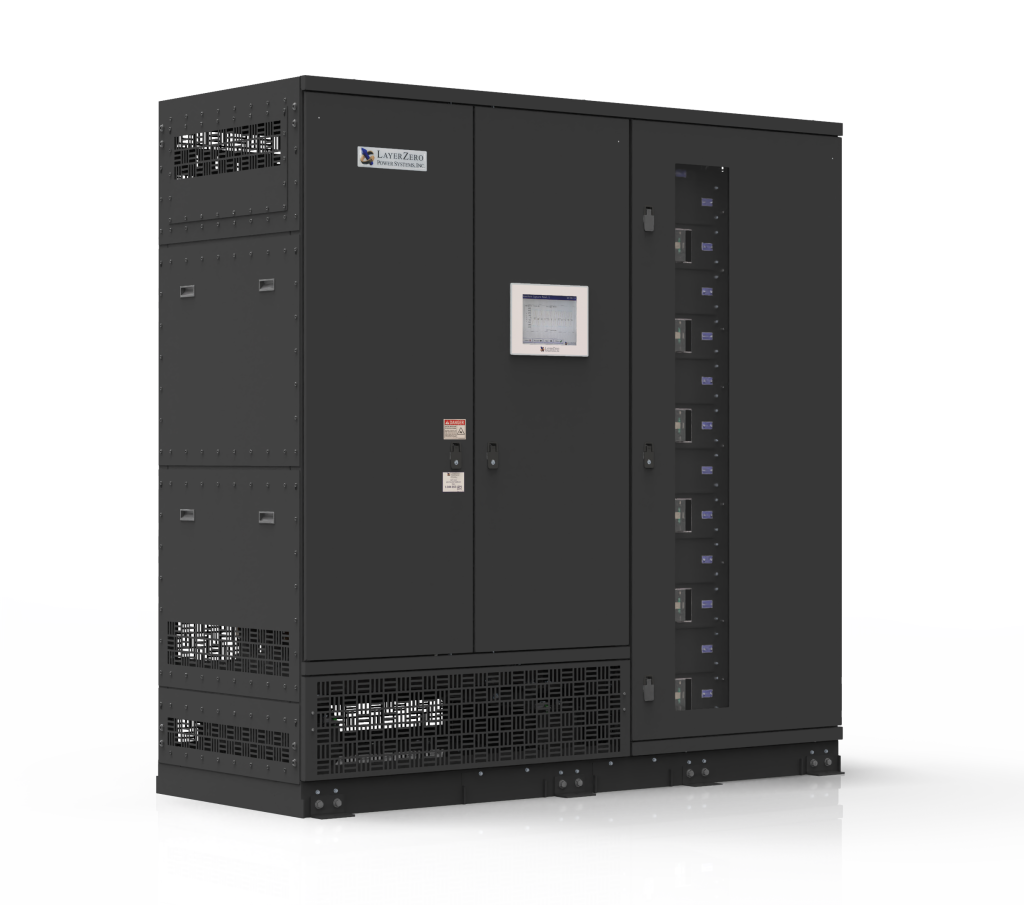
LayerZero® Power Distribution Unit (PDU) designed for mission-critical branch circuit distribution and front-access serviceability.
A LayerZero® Power Distribution Unit receives power from an upstream source and distributes it to critical downstream loads through monitored and protected branch circuits.
How Does a Power Distribution Unit Work?
A PDU receives incoming power from equipment such as a Static Transfer Switch, UPS, or utility-fed source and distributes that power through multiple protected branch circuits.
Depending on system design, a Power Distribution Unit may include:
Unlike rack-mounted plug-strip PDUs, LayerZero Power Distribution Units are engineered as mission-critical electrical distribution equipment for larger downstream power architectures.